Blog Details
Walk-In vs. Reach-In Stability Chambers: Which Is Right for Your Lab?
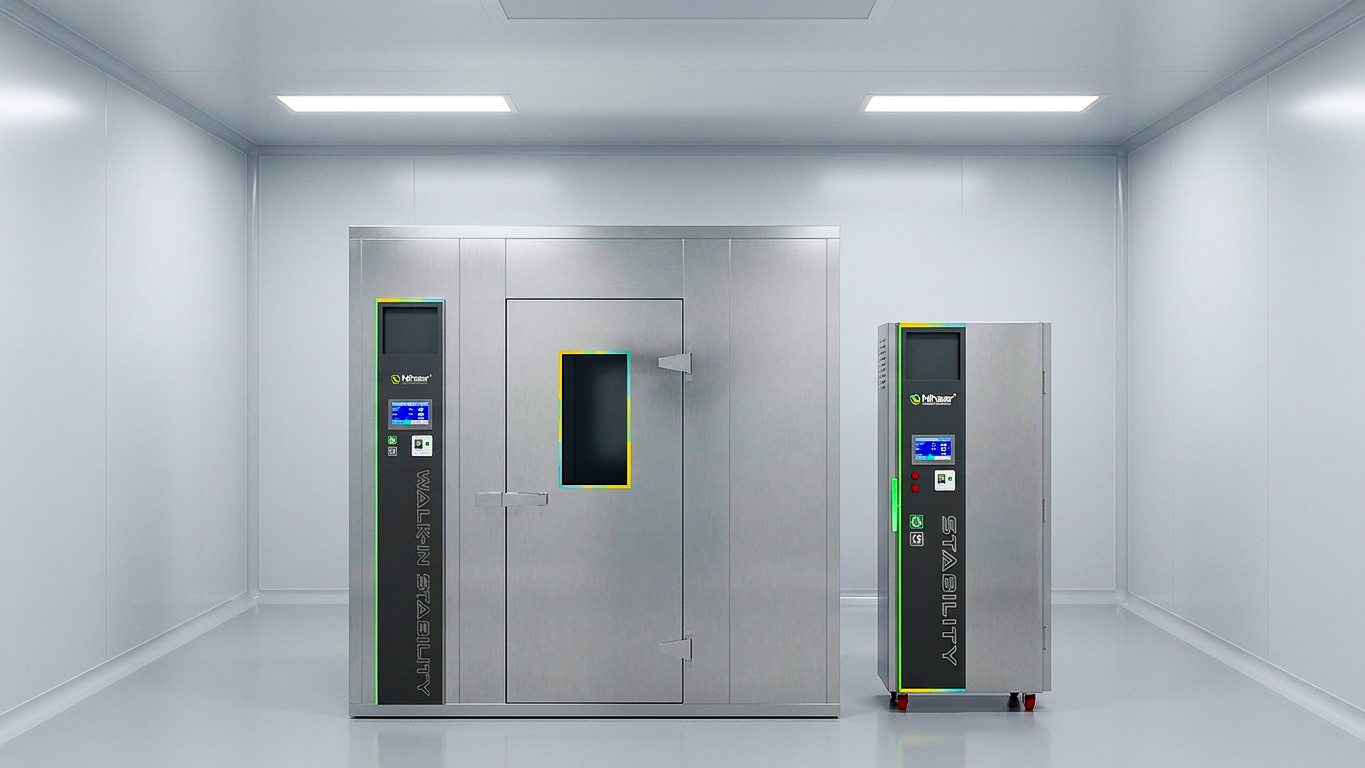
Choosing between a walk-in and a reach-in stability chamber is one of the most consequential procurement decisions a pharmaceutical or biotech lab can make. The right choice depends on your sample volumes, available floor space, budget, regulatory requirements, and long-term growth plans. This guide breaks down the key differences so you can make a confident, informed decision.
What Are Stability Chambers?
Stability chambers are precision-controlled environments used to store pharmaceutical products, APIs, finished dosage forms, and biological samples under defined temperature and humidity conditions. They are central to ICH-compliant stability studies and quality control workflows across pharma, biotech, and R&D.
Reach-In Stability Chambers: An Overview
Reach-in chambers are freestanding, cabinet-style units typically ranging from 200 to 2,000 litres in capacity. They are designed for floor placement within a laboratory setting.
Key Advantages
- Compact footprint — ideal for labs with limited floor space
- Lower upfront capital investment
- Faster installation and qualification (IQ/OQ/PQ)
- Easier to relocate if your lab layout changes
- Available in a wide range of ICH climate zone configurations (Zone I–IVb)
Limitations
- Limited storage capacity — not suited for large-scale studies
- Door opening disrupts internal conditions more significantly
- Multiple units needed for high-volume programs, increasing maintenance overhead
Best For : Early-phase R&D labs, startups, and labs running pilot-scale stability studies with manageable sample volumes.
Walk-In Stability Chambers: An Overview
Walk-in chambers are large, room-sized enclosures, often custom-built and ranging from a few cubic metres to several hundred square metres. They are engineered for high-volume storage and continuous access.
Key Advantages
- Massive storage capacity, accommodates thousands of samples simultaneously
- Supports multiple simultaneous stability programs and time-points
- Personnel can enter and retrieve samples without significantly disrupting conditions
- More cost-effective per-sample at scale
- Better suited for GMP manufacturing environments
Limitations
- Significant capital expenditure and construction lead times
- Requires dedicated floor space and structural/utility planning
- Longer qualification and validation timelines
- Higher energy consumption
Best For : Commercial-stage pharmaceutical manufacturers, CMOs/CDMOs, and QC labs managing large, multi-product stability programs.
Side-by-Side Comparison
Here is a quick-reference comparison of the two options across the most critical decision factors:
| Category | Reach-In Chamber | Walk-In Chamber |
| Capacity | 200L to 2,000L | 5,000L to 3,00,000L+ |
| Capital Cost | Lower | Higher |
| Installation Time | Instant | 1-10 Days |
| Qualification Effort | Moderate | Moderate to High |
| Sample Throughput | Low to Medium | High to Very High |
| Space Requirement | Minimal | Dedicated Area |
Regulatory Considerations
Both walk-in and reach-in chambers must meet the same core regulatory requirements, ICH Q1A(R2) for storage conditions, USP 1 for temperature mapping, and 21 CFR Part 11 if electronic records are involved. However, walk-in chambers typically require more rigorous spatial temperature and humidity mapping due to their larger volume and potential for greater gradient variation.
When selecting either type, ensure the unit supports data logging, alarm systems, and audit trails compatible with your quality management system (QMS).
Questions to Ask Before You Buy
- How many samples and stability programs will I be running in 1–3 years?
- Do I have the floor space and utility infrastructure for a walk-in?
- What is my validation budget and timeline?
- Am I in early R&D or commercial manufacturing?
- Do I need 24/7 remote monitoring and alarm integration?
There is no universally 'better' option, the right chamber depends on your specific operational context. Reach-in units offer agility and affordability for smaller programs; walk-in chambers deliver the scale and throughput needed for commercial operations. Many growing pharma organisations start with reach-in units and transition to walk-in infrastructure as they scale.
Need help assessing your specific requirements? Our team of stability specialists can guide you through the selection, configuration, and validation process from day one.
To understand the type of chamber is right for you, contact us and our team will help you make the right choice.